Understand what private browsing does and does not hide from an AI companion service
A source-backed walkthrough to understand what private browsing does and does not hide from an AI companion service, with scoped permissions and explicit unknowns.
This task records scoped evidence. It is not setup certification, legal advice or a universal result.
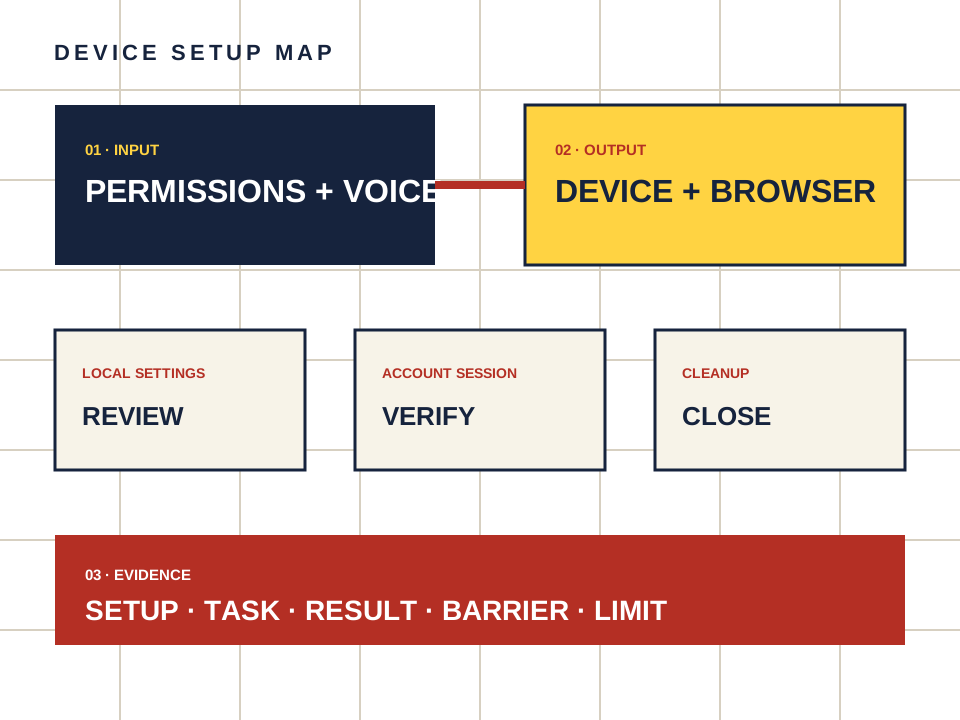
What this page owns
Understand what private browsing does and does not hide from an AI companion service.
Begin with the named task and preserve the setup. Do not turn a product statement, automated scan or reachable page into proof that a person can complete the task.
Four steps, one documented result
- 01
Start with fictional, low-risk test content and record the exact device, software version and current setting.
- 02
Separate what private browsing removes locally from what the signed-in service can still retain.
- 03
Close every private window, then inspect downloads, account history and device notifications for remaining traces.
- 04
Record pass, problem or not checked; restore the least-permissive practical setting and note what remains unknown.
Make the observation reproducible
- Setup
- Device, operating system, browser, input method and assistive technology.
- Task
- Starting point, action and expected outcome in plain language.
- Result
- Pass, barrier observed or not checked — never a guessed score.
- Limit
- Device controls reduce avoidable exposure, but they do not prove what a service stores or deletes. Keep vendor policy, local observation and unknown behavior clearly separated.
Keep the route separate from the evidence.
Candy AI is one adult companion service discussed here. The link below may earn us a commission. It does not change the method or create an setup endorsement.
Open Candy AI — sponsored